
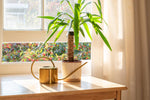
Yucca Plant Care
, 17 min reading time
, 17 min reading time
The Yucca plant is a popular houseplant because of its sleek, green leaves and robust appearance. If you are new to caring for this plant, you probably have a number of questions. In this blog, we answer a number of questions about the care of Yucca plants.
The term "Yucca plant" is generally used for various species from the Yucca genus, succulent plants with pointed leaves in rosettes, whereas "Yucca palm" specifically refers to Yucca elephantipes, an evergreen tree-like plant with long leaves growing from a central trunk, known for its palm-like appearance. appearance.
There are many different types of Yuccas, of which Yucca rostrata and Yucca elephantipes are just two examples. Yucca rostrata, also known as Beaked Yucca, is characterized by its spherical rosette of long, slender leaves and is native to Mexico and parts of Texas. Yucca elephantipes, also known as Giant Yucca or Spineless Yucca, is popular as a houseplant due to its soft, long leaves without sharp spines and is native to Central America.
Yuccas are succulent plants that are naturally drought-resistant. It is important to water them with care to keep them healthy and thriving.
Yucas thrive best in well-draining soil that dries out well between waterings. In general, it is advisable to water the plant once every 2-3 weeks. In spring and summer, when growth is most active, watering may be needed more frequently, but always only after the top layer of soil has dried out thoroughly. Regularly check the soil moisture by sticking a finger into the soil.
If a Yucca receives too little water, the plant shows signs of stress. The leaves can become limp and drooping, and in severe cases, they can turn yellow and fall off. To prevent this, make sure to regularly check the soil moisture and water the plant when the soil feels dry up to about halfway up the pot. Adjust watering based on environmental conditions and avoid keeping the plant in waterlogged soil, which can cause root rot.
Spraying a Yucca plant can help maintain healthy humidity around the leaves, especially in dry indoor environments. Here are some important considerations:
Frequency: Yuccas are drought-tolerant plants and do not require high humidity. Spray the leaves occasionally to remove dust and keep them clean, but do not overdo it to prevent the roots from becoming too wet.
Best time: Preferably do this in the morning so that any moisture on the leaves can evaporate during the day. Avoid spraying in the late afternoon or evening to prevent mold growth.
Technique: Use soft water at room temperature and spray evenly over the leaves. Focus on removing dust and dirt, which can suffocate the plant.
By following these simple guidelines, you can maintain the health and beauty of your Yucca plant while simultaneously creating an optimal environment for its well-being.

The location of your Yucca plant is crucial for its health and growth. Choose a spot with plenty of bright, indirect light, preferably in a room with south- or west-facing windows. Yuccas thrive in this environment because they receive sufficient light without direct sunlight, which can damage their leaves. Avoid places with drafts or sudden temperature fluctuations, as Yuccas can be sensitive to these conditions. srcset="https://cdn.shopify.com/s/files/1/0804/7319/4829/files/yucca-plant-standplaats_1800x.jpg?v=1718546622 1800w, https://cdn.shopify.com/s/files/1/0804/7319/4829/files/yucca-plant-standplaats_1600x.jpg?v=1718546622 1600w, https://cdn.shopify.com/s/files/1/0804/7319/4829/files/yucca-plant-standplaats_1400x.jpg?v=1718546622 1400w, https://cdn.shopify.com/s/files/1/0804/7319/4829/files/yucca-plant-standplaats_1200x.jpg?v=1718546622 1200w, https://cdn.shopify.com/s/files/1/0804/7319/4829/files/yucca-plant-standplaats_1000x.jpg?v=1718546622 1000w, https://cdn.shopify.com/s/files/1/0804/7319/4829/files/yucca-plant-standplaats_800x.jpg?v=1718546622 800w, https://cdn.shopify.com/s/files/1/0804/7319/4829/files/yucca-plant-standplaats_600x.jpg?v=1718546622 600w, https://cdn.shopify.com/s/files/1/0804/7319/4829/files/yucca-plant-standplaats_400x.jpg?v=1718546622 400w" section-image-id-1="1718546611126">
To grow your Yucca plant well, you can follow these steps:
Location: Place your Place the Yucca plant in a spot with plenty of bright, indirect light. Yuccas thrive in rooms with south- or west-facing windows, where they receive sufficient light without direct sunlight.
Watering: Yuccas are drought-tolerant plants. Allow the soil to dry out well between waterings. Generally, watering once every 2-3 weeks is sufficient, depending on the conditions. Adjust your watering regime based on the plant's needs and environmental conditions.
Feeding: Feed your Yucca plant a balanced fertilizer once every few months during the growing season (spring and summer) to stimulate growth. Follow the instructions on the packaging for the correct dosage.
Repotting: Repot your Yucca plant every few years in fresh potting soil. This helps keep the roots healthy and provides sufficient room for growth.
Pruning: Regularly prune away dead or damaged leaves to keep the plant looking healthy and to make room for new growth.
Humidity: Yuccas do not need high humidity, but occasional misting can help remove dust from the leaves and keep the plant clean.
By following these guidelines, you can help your Yucca plant grow healthy and lush, allowing you to enjoy this beautiful plant for years to come.
Taking Yucca cuttings is an easy way to propagate your houseplant. Follow these tips to successfully grow a new Yucca.
It is best to propagate your Yucca in the spring or early summer, when the plant is actively growing.
Pruning a Yucca plant may be necessary to remove dead leaves or to maintain the shape and size of the plant. Here are the steps to properly prune your Yucca plant:
Preparation:
Identify the leaves to be pruned:
Pruning Yucca:
Care after pruning:
Storage and safety:
By following these steps, you can effectively prune your Yucca plant to maintain its health and appearance. promote, while ensuring the plant develops well.
Repotting a Yucca plant is an important step to promote the plant's health and growth. Here are the steps you can follow to successfully repot your Yucca plant:
1. Timing: Choose the right moment to repot your Yucca plant, preferably in spring or early summer when the plant is actively growing.4. Inspection of the roots:
By following these steps, you can successfully repot your Yucca plant and provide it with a new and healthy growing environment.

If your Yucca plant gets yellow leaves, this can have several causes. Here are some possible actions you can consider:
Watering: Check if you might be overwatering or underwatering the Yucca. Yuccas tolerate dry conditions well, so ensure the soil is thoroughly dry before watering again. Allow the soil to dry out well between waterings.
Light: Yuccas need plenty of light, so ensure your plant receives sufficient natural light. Place it in a well-lit room, preferably near a south- or west-facing window.
Nutrients: A lack of nutrients can also cause yellow leaves. Give your Yucca plant a mild fertilizer suitable for houseplants once every few months, especially during the growing season (spring and summer).
Humidity: Yuccas can thrive in dry air, but in very dry conditions, they may develop yellow leaves. Consider misting the plant with water occasionally to increase the humidity around the leaves.
Pest inspection: Check your Yucca's leaves for any signs of pests such as spider mites or mealybugs. If you find pests, treat them as soon as possible with a suitable pesticide.
Repotting: If the Yucca has been in the same pot for a long time, it may be lacking space or fresh soil. Consider repotting the plant in fresh potting soil, preferably in the spring.
By considering these steps and making the right adjustments, you can hopefully improve the health of your Yucca plant and prevent yellow leaves.
If your Yucca has yellow leaves, it is important to cut them off to prune to keep the plant healthy. Use sharp, clean scissors or pruning shears to cut off the yellow leaves close to the base of the plant. By removing dead or diseased leaves, you promote new growth and prevent diseases from spreading to the healthy parts of the plant.
Brown tips on the leaves of a Yucca plant can have various causes:
Too little water: Yuccas are drought-tolerant plants, but if they are left dry for too long, the leaf tips can dry out and turn brown.
Too much direct sunlight: Although Yuccas love bright light, too much direct sunlight and heat can lead to leaf burn, especially at the tips.
Too low humidity: Yuccas thrive in dry conditions, but in an environment with very low humidity, the leaf tips can dry out.
Old leaves: Natural aging can lead to brown tips on older leaves, especially when the plant is producing new leaves.
To prevent brown tips on Yucca leaves, ensure you water the plant regularly when the soil feels dry, but allow the soil to dry out well between waterings. Place the Yucca in a spot with bright, indirect light and avoid direct sunlight for long periods. If humidity is low, consider lightly misting the leaves with water occasionally. Regularly remove dead or damaged leaves to keep the plant healthy.
The size of a Yucca plant varies depending on the species and growing conditions. Some Yucca plants can remain relatively small, while others grow into large houseplants with long stems and tall, striking leaves. In general, Yucca plants can become quite large and need sufficient space to grow, especially when they are mature. It is important to take into account the available space in your home and the desired size of the plant when choosing a Yucca plant.
The Yucca is a poisonous houseplant, which means it is not suitable for households with children or pets. If you decide to bring this plant into your home anyway, pay close attention to the leaves. If a piece has been taken out of the leaf and your child or pet shows symptoms of poisoning, contact a doctor or veterinarian immediately.
In addition to providing the right amount of water and light, regularly dusting the leaves is important to keep the plant healthy. Also check regularly for signs of pests or diseases and treat them if necessary.
Buying a Yucca is an excellent choice for your interior due to its versatility and durability. This striking plant, known for its sword-shaped leaves and robust stem, adds a touch of exotic flair to any room. Moreover, Yuccas are very low-maintenance, making them ideal for both beginners and experienced plant enthusiasts. Additionally, the Yucca has air-purifying properties, which contributes to a healthier living environment. Whether you want to create a minimalist style or a lush green oasis, the Yucca is a stylish and practical addition to your home or office.


