
5% off with code HELLO5
 Hedge plants
 Beech hedge (Fagus Sylvatica)
 Buxus Sempervirens
 Euonymus Japonicus (Boxwood Substitute)
 Shiny medlar (Photinia Fraseri)
 Hornbeam (Carpinus Betulus)
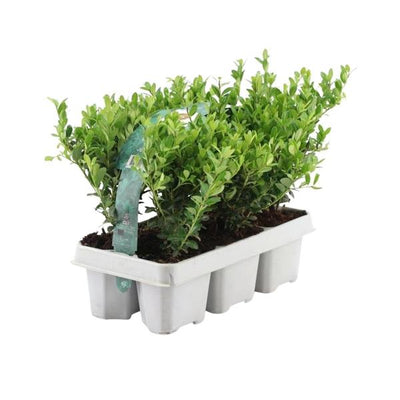 Ilex Crenata
 Cherry laurel (Prunus Laurocerasus)
 Privet Hedge - Privet (Ligustrum)
 Taxus Baccata
 Firethorn (Pyracantha Coccinea)
 Ready-made The Hague
 Hedge To Go
 Thuja (Tree of Life)
The common hawthorn is a deciduous shrub known for its distinctive white flowers, which develop in the spring. These flowers are not only beautiful but also attract bees and other pollinators, which can promote biodiversity in your garden. After flowering, small, bright red berries form, which appear in the autumn and are a beautiful visual addition to your garden. The Crataegus monogyna is highly resistant to various weather conditions, making it an ideal choice for diverse garden types. This hedging plant can grow in both sun and shade and is relatively low-maintenance, making it very popular among garden owners. The common hawthorn grows quickly and can form a dense hedge in a short period of time that is both functional and aesthetically pleasing.
The hawthorn is ideal as a hedge plant due to its versatility and robustness. Thanks to its thorny branches, this hedge plant forms an effective barrier against prying eyes or unwanted intruders. The hawthorn has a natural tendency to branch densely, which means you quickly get a dense, closed hedge. Moreover, the hawthorn is very resistant to diseases and pests, meaning it requires little maintenance. The hawthorn not only has practical benefits but is also a beautiful addition to your garden, especially during flowering and the appearance of the berries. It is important to prune the hawthorn regularly to maintain its shape and keep the hedge healthy. Due to its strong branches and robust growth, the hawthorn is also a wind-resistant hedge plant, which is ideal for gardens susceptible to strong winds. **Combining a Hawthorn Hedge with Other Garden Plants** **A hawthorn hedge can be perfectly combined with other garden plants to create a varied and interesting garden landscape. Because the hawthorn is a dense hedge plant, it provides a good base for adding other border plants and ground covers that can grow in the shade of the hedge. For a colorful effect, you can, for example, plant lavender or rose along the hawthorn hedge, which complements the hawthorn's bloom with vibrant colors and fragrances. Other spring bloomers such as snowdrops or hyacinths can be planted beneath the hawthorn hedge, creating a colorful underlayer. Berry bushes also pair well with the hawthorn, as these shrubs bear berries in the autumn. Combining the hawthorn with other garden plants provides not only visual variety but also rich biodiversity in your garden.
The hawthorn is a hardy hedging plant that is highly resistant to cold and wind, making it an excellent choice for various climate zones. The branches are thorny, providing the plant with extra stability and protection. Crataegus monogyna has a wide root system, which helps stabilize the soil and prevent erosion. The leaves are green and lance-shaped, and in autumn they turn yellow to red, creating an attractive fall color in your garden. The flowers, which bloom in May or June, are small but numerous and form a dense inflorescence. The hawthorn not only has ornamental value but also bears small, edible berries that attract foxes, birds, and other animals. Moreover, this garden plant is highly resistant to many common pests and diseases, making it relatively easy to maintain.
If you are considering planting a hawthorn in your garden, it is important to know where to buy the best quality Crataegus monogyna. Many garden centers and online shops offer young hawthorn plants, often in various sizes and varieties. It is advisable to choose plants with a healthy root ball so that the plant can grow well once it is placed in the ground. When buying a hawthorn, it is important to consider the growth form (whether you choose a shrub or a tree form) and the growing conditions in your garden. Hawthorns thrive in full sun but can also tolerate shade. Once you have purchased a hawthorn, ensure that you plant it at the correct depth and perform regular maintenance to ensure the plant can grow optimally.


