
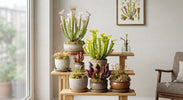
Sarracenia Care
, 12 min reading time
, 12 min reading time
Sarracenia, also known as North American carnivorous plants, have specific water requirements to thrive. They love plenty of water and feed on rain. The best way to care for these plants is by watering them regularly with distilled water or rainwater.
You should water Sarracenia regularly, preferably when the top layer of soil dries out. During the growing seasons (spring and summer), this can be daily, depending on the temperature and humidity. In autumn and winter, when the plant is dormant, you can water less, but ensure that the soil never dries out completely.
Sarracenia does not like direct misting on the leaves, as this does not increase humidity sufficiently. It is better to water the plant at the base so that the roots can absorb the water. However, it does no harm to mist lightly occasionally if the air is extremely dry, but avoid doing this too often.
Sarracenia requires a specific location to grow optimally. These plants thrive best in a sunny environment with plenty of direct sunlight and moist, well-draining soil. They grow naturally in marshy areas, so they need a constantly moist substrate. It is important that they are placed in an environment that offers both sufficient sun and the right soil conditions to fully utilize their carnivorous properties.

Yes, Sarracenias can be kept outdoors. They thrive in a sunny environment and prefer wet soil, such as in marshy areas or gardens with high humidity.
The winter hardiness of Sarracenia depends on the species. Some species, such as Sarracenia purpurea, are hardy and can tolerate temperatures down to -15°C, while other species are more sensitive to the cold. In colder climates, protection may be necessary during the winter months.
Sarracenias prefer a warm to moderate temperature between 20°C and 30°C in the summer. They can also tolerate lower temperatures in the winter, but most species survive best when they experience a cool winter period of about 5°C to 10°C.
Repotting Sarracenias is an important task to promote the health and growth of the plant. These carnivorous plants grow in moist, well-draining soil and need a new pot regularly to provide sufficient space for their roots. Repotting may be necessary every 1 to 2 years, depending on the size of the plant and the condition of the soil. It is best to do this in the spring, just before the start of the growing season, so that the plant can recover well.
Choose the right pot
Choose a pot that is slightly larger than the current pot, ideally about 2-3 cm wider in diameter. Ensure that the pot has drainage holes to drain excess water.
Prepare the new substrate
Use a special mixture for carnivorous plants, consisting of peat moss and perlite or silicate sand. Avoid regular potting soil, as it is too rich in nutrients and can be harmful to the plant.
Carefully remove the plant
Remove the Sarracenia from the old pot by gently pulling on the roots. Shake off excess soil from the roots, but be careful not to damage the roots.
Inspect the roots
Check the roots for rot or damage. Cut off damaged or rotten roots with clean, sharp scissors.
Place the plant in the new pot
Place the Sarracenia in the new pot and slowly fill the pot with the new substrate. Ensure that the roots are well covered, but that the plant is not too deep in the pot – the top of the roots should remain just below the rim of the pot.
Water the plant well
Water the plant well after repotting so that the substrate settles well around the roots. Ensure that water can always drain well through the pot.
Place the plant in a suitable location
Place the plant in a spot with sufficient sunlight and ensure that the soil remains moist, without the roots standing in standing water.
By following these steps, you give your Sarracenia the best chance to adapt well to its new environment and continue to grow.
Sarracenias are carnivorous plants and feed primarily on insects that they catch with their distinctive tubular leaves. These plants do not need extra nutrition in the form of fertilizers, because they obtain their necessary nutrients from the insects they catch. It is important to respect the natural eating habits of the Sarracenia as much as possible.
What to feed your Sarracenia:
Insects
Sarracenia catches insects such as flies, ants, and small butterflies on its own. If you keep the plant outdoors, it will in many cases catch enough insects. Indoors, you can offer small insects such as fruit flies or ants. Make sure the insects are not too large, as this can damage the plant.
No extra fertilizers
Do not give your Sarracenia artificial fertilizer or regular plant food. Carnivorous plants like the Sarracenia get nutrients from the soil, but they obtain their most important nutrients from the insects they catch. Too much fertilizer can be harmful and spoil the plant.
If the plant is indoors and does not catch insects
If you have a Sarracenia indoors and it does not catch insects, you can try placing an insect in the leaves occasionally. However, this is not necessary if the plant is in an environment where there are plenty of insects.
Water
Sarracenia needs a lot of water, but make sure you use the right type of water. Rainwater or distilled water is best, as tap water often contains minerals that can be harmful to the plant.
In most cases, a Sarracenia does not need much extra care regarding nutrition. As long as the plant is in a good, sunny location and receives the correct humidity and water quality, it will develop well and be able to catch insects for its food.
Sarracenias have specific soil requirements that differ significantly from ordinary houseplants. Always use a special mixture for carnivorous plants, consisting of sphagnum moss (peat) and, for example, perlite or silicate sand. This soil is low in nutrients and has a low pH, which is essential to prevent the roots from being damaged by too much nutrition. Avoid using standard potting soil, as it often contains artificial fertilizer that can be harmful to the plant. The right substrate ensures that the Sarracenia can function optimally and catch insects for its food.

Carnivorous plants, such as the Sarracenia, can be propagated by cuttings, which is a great way to get new plants. Taking cuttings is a relatively simple method that allows you to propagate the plant without the seed option. For carnivorous plants like Sarracenia, it is best to take cuttings from the root buds or the shoots that develop in the spring. This ensures that the new plant has the right characteristics and growth results.
Choose the right time
The best time to propagate carnivorous plants is in the spring, just when the plant starts to sprout and form new shoots. This is the active growing season, which helps with successful propagation.
Choose a healthy root bud or shoot
Look for a healthy root bud or shoot at the base of the plant. It must be firm and show no signs of disease or damage.
Cut off the root bud or shoot
Use a clean, sharp knife or pruning shears to carefully cut off the root bud or shoot. Ensure that you leave the root bud intact, as this is the most important source for the growth of a new plant.
Place the cutting in a suitable pot
Place the cut root bud or shoot in a pot with a special mixture for carnivorous plants, such as peat moss mixed with perlite or sand. The soil must be well-draining and low in minerals, as described earlier.
Ensure the right conditions
Place the pot in a location with plenty of sunlight and high humidity. Ensure that the soil remains moist, but not too wet. Carnivorous plants need light, well-draining soil to root properly.
Be patient
It may take some time for the root bud or shoot to start developing into a new plant. This process can take several months, so patience is essential. Continue to take good care of the cutting with water and sunlight.
By following these steps, you increase the chance of successful propagation of your carnivorous plant. With proper care, the new plant can start growing quickly and eventually begin catching insects!
The Sarracenia, also known as the American carnivorous plant, is not toxic to humans or pets. Although the plant catches and eats insects, it is completely harmless to humans. The plant's trapping mechanisms, such as the tubular leaves with their sticky interiors, are specially adapted to attract and digest small insects, but they are not harmful to larger organisms.
The digestive enzymes that the Sarracenia uses to break down its prey are only effective on insects and other small invertebrates. This means that the plant can be safely kept in the garden or indoors, even in households with children or pets, as long as they do not try to eat or touch the plant itself. However, it is always advisable to supervise young children and pets near any plant to prevent accidental damage or curiosity.
Pruning is not necessary, but you can remove dead leaves or cups to keep the plant looking neat. This also prevents mold formation. Ensure that you only cut off the wilted or damaged parts and avoid removing healthy leaves, as these are important for photosynthesis.
If your Sarracenia is not doing well, check the following points:
With proper care, your Sarracenia will flourish and last a long time!
If your Sarracenia turns brown, there can be several causes. It is often a sign that the plant is not in optimal conditions, but it does not always have to be a cause for panic. There are a few possible causes for browning:
Leaf aging
Sarracenias develop new leaves in the spring, and the older leaves often wilt in the autumn or winter. It is normal for older leaves to turn brown and die off. In this case, you can carefully prune the dead or wilted leaves to keep the plant looking neat.
Too much sunlight
If the Sarracenia receives too much direct sunlight, especially if the plant is suddenly placed in full sun, the leaves can burn and turn brown. Ensure that the plant is gradually exposed to sunlight if it has just been moved to a sunnier spot.
Insufficient water or poor water quality
Sarracenia needs plenty of water, preferably rainwater or distilled water, as tap water often contains too many minerals. If the plant does not receive enough water, or if the water is too hard, the leaves may turn brown.
Fungus or diseases
Sometimes browning can be the result of fungal or bacterial infections. Ensure good air circulation and avoid overwatering the plant to prevent such problems.
If the brown leaves do not disappear on their own, you can carefully remove them to keep the plant healthy. It is also important to check the care conditions of your Sarracenia to see if anything needs to be adjusted regarding the growing conditions. With the right care and attention, the Sarracenia, or pitcher plant, can be an impressive and healthy addition to your garden or home. Ensure sufficient sunlight, suitable moist soil, and the right type of water to allow the plant to grow optimally. Also, keep a close eye on the environment so that mold or diseases do not stand a chance. With patience and love, your Sarracenia will be able to fully utilize its unique, carnivorous properties and enrich your garden or room.


