Filling a Corten steel planter
, 7 min reading time
, 7 min reading time
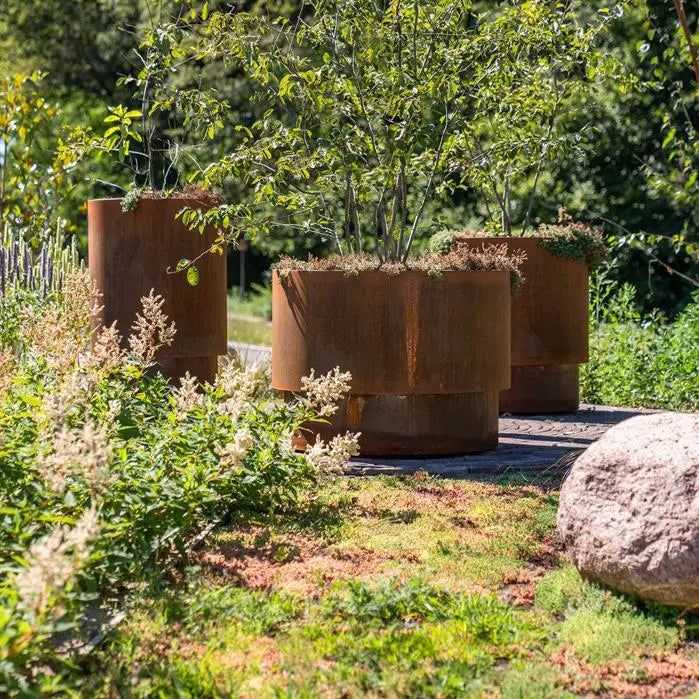
Corten steel planters are popular due to their rugged, industrial look and long lifespan. They are durable, weather-resistant, and form a beautiful combination with both modern and natural garden designs. But how do you properly fill a corten steel planter? A frequently asked question, because proper filling determines not only the appearance but also the health of your plants and the lifespan of the planter itself. In this article, we explain step-by-step how to fill a Corten steel planter, what to look out for when building layers, and which materials work best for drainage, substrate, and planting. Whether you are filling a large planter for an ornamental tree or a smaller one for perennial plants and flowers – proper construction prevents waterlogging, rust formation on the inside, and root rot. We also address practical questions, such as: Do you need to line the inside of a Corten steel planter? data-end="1465">What layer thickness do you need per layer?
How do you ensure proper drainage?
By filling your Corten steel planter correctly, you ensure years of gardening pleasure and healthy, flowering plants. Let's start with the basics.
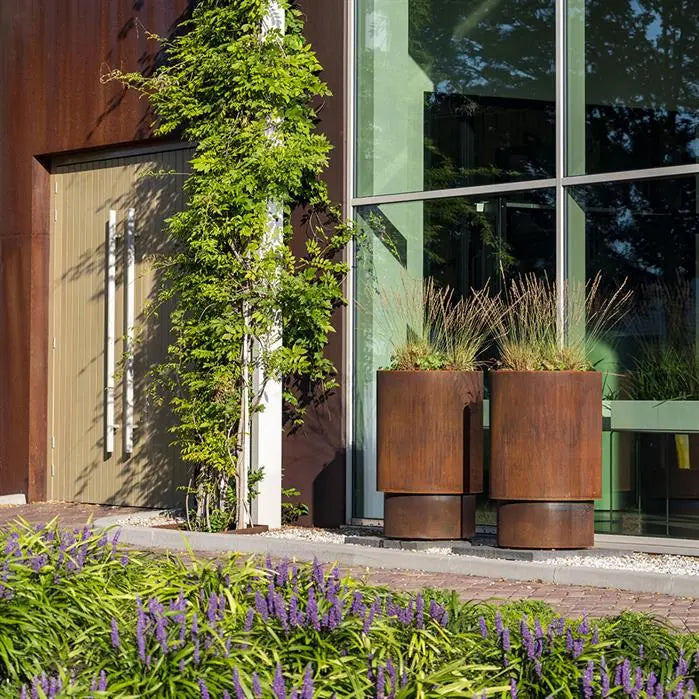
Although Corten steel is a strong and durable material, it requires proper preparation when used as a planter. The filling plays a major role in this. It is not only about what you put in the bin, but also about how you do it. A good setup ensures:
Good drainage: Prevents water from pooling, which can cause rust formation on the inside of the container and root rot in plants.
Healthy root growth: With the right growing medium, plants get the space to grow and develop well.
Protection of the planter: By ensuring good moisture drainage, you prevent the steel on the inside from remaining wet for too long, which extends the lifespan of the planter.
Many people think that you can simply fill a Corten steel planter with soil, but that is a pitfall. By pouring potting soil directly onto the bottom, you often get water accumulation at the bottom, which increases the risk of rust and plant stress. The trick is to apply multiple layers, each with its own function. Think of a drainage layer, root barrier fabric, and a nutrient layer of potting soil or garden soil. By working smartly with materials such as hydro granules, gravel, or lava stone, you can significantly improve drainage and keep roots healthy. Correct filling therefore really makes the difference.
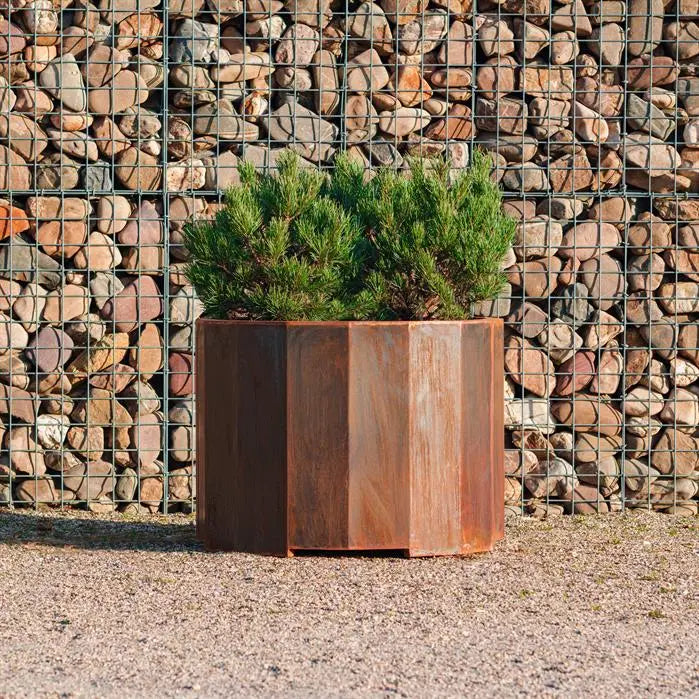
To ensure that your planter functions properly and your plants remain healthy, you work with a layer construction system. Below, we discuss each layer in detail.
The bottom layer ensures the drainage of excess water. Without proper drainage, water can accumulate at the bottom of the planter, which is harmful to both the Corten steel and your plants.
Suitable materials for the drainage layer:
Hydro granules (light option)
Gravel or crushed stone (heavy and very effective)
Lava stone (good moisture regulating)
Recommended layer thickness: 8–15 cm, depending on the height of the planter.
Apply a root barrier fabric between the drainage layer and the soil. This prevents soil from mixing with the drainage, which would cause it to lose its effectiveness.
Note: use a water-permeable cloth so that moisture can drain downwards, but the soil stays neatly in place.
This is the most important layer for the health of your plants. Use high-quality potting soil or garden soil for this, tailored to the type of plants you are going to plant.
Tip: mix compost or organic fertilizers into the soil for extra nutrition. For plants with specific requirements (such as acid-loving plants), you can use special soil, such as rhododendron soil.
Recommended layer thickness: At least 30–40 cm, more for deep-rooted plants.
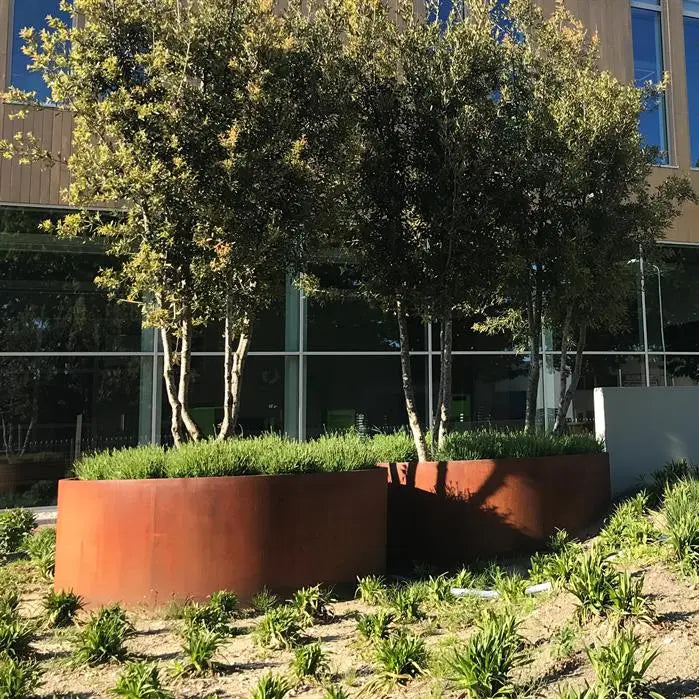
In addition to the technical construction, there are a number of practical points to consider that you certainly should not forget:
In principle, that is not necessary. Corten steel is intended to rust on the outside, and the inside is generally less susceptible as long as the drainage is good. Nevertheless, some users opt for an extra lining or protective coating on the inside, for example with EPDM foil or rubber, to further extend the lifespan. This is especially recommended for:
Use of acidic soil
Planters without drainage holes
Use of water retention or pond-like applications
Many Corten steel planters come with one or more drainage holes. Check if these are present – and enlarge or drill them out if necessary. No or too few holes can lead to water accumulation and damage to the steel.
Some people think they can fill the planter with a sealed plastic inner pot. While this does prevent rust, it often leads to poor drainage and unhealthy plants. Always ensure a solution where excess water can drain away.
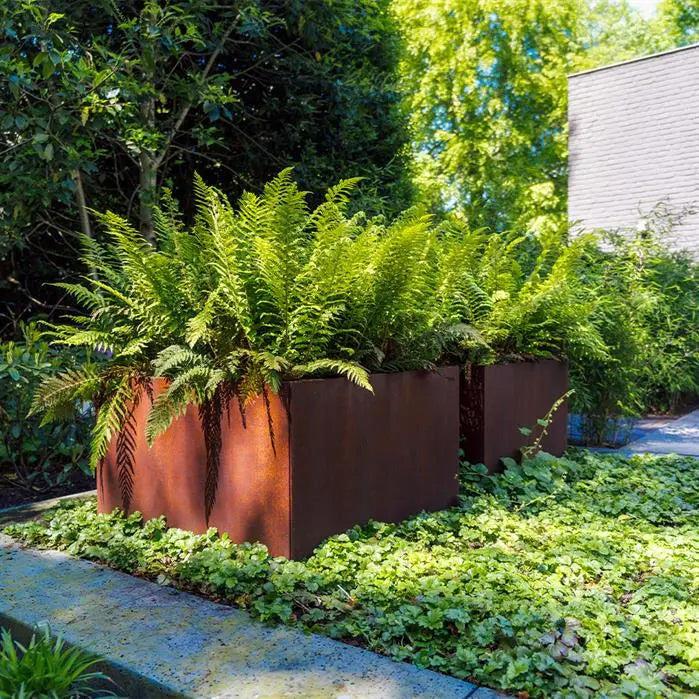
Corten steel planters are versatile and suit a wide range of plants, from ornamental grasses to small trees. Because Corten steel retains heat well, it is wise to choose plants that can withstand it well.
Suitable plants:
Ornamental grasses (such as Pennisetum, Festuca)
Lavender and sage
Small olive trees and small ornamental trees
Sedum and others succulents
Perennials such as geranium, lady's mantle or hosta
Note regarding frost-sensitive plants: in a metal container, the soil cools down faster in winter. Protect sensitive plants with fleece if necessary or place the planter in a sheltered spot.

Filling a Corten steel planter may seem simple, but a proper layering is crucial for the health of your plants and the lifespan of your planter. With a well-thought-out layer structure of drainage, root barrier fabric, and nutrients, you create the ideal conditions for your plants. In addition, you prevent problems such as waterlogging, root rot, or rust formation on the inside. Whether you are filling a planter for ornamental grasses, herbs, or a small tree: ensure sufficient drainage and choose good quality soil.
In short, proper filling = longer enjoyment of your stylish Corten steel planter!