5% off with code HELLO5
Blue Wisteria is an impressive climbing plant that gives your garden a majestic appearance. This plant, also known as Wisteria, is known for its beautiful hanging flower clusters in various shades of blue and purple. The long, fragrant flowers appear in the spring and continue to offer an enchanting spectacle. Blue Wisteria grows quickly and can be used in various ways, such as against a pergola, fence, or wall. This garden plant thrives best in sunny, well-drained soil and requires some patience to come into full bloom, but the result is certainly worth the effort. Add Wisteria to your garden for a spectacular and timeless look.
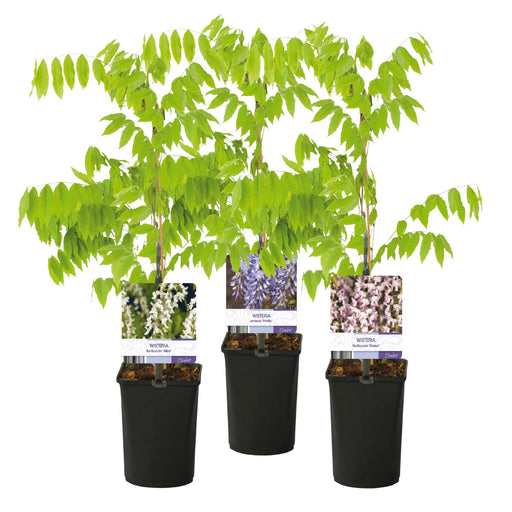
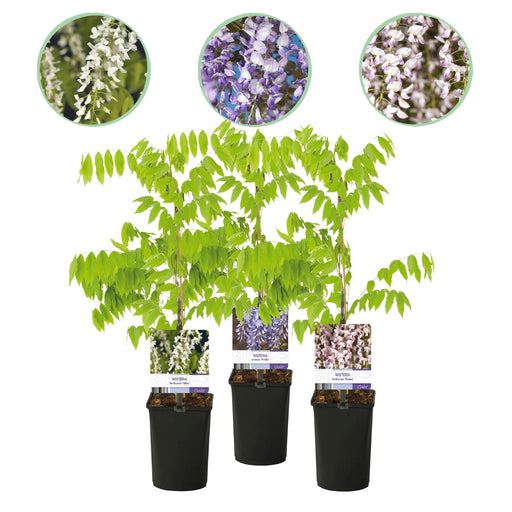
"Wisteria floribunda Tricolour is a combination of 3 beautiful Wisterias known for its striking flower clusters. These 3 varieties have a unique co...
View full detailsBlue Wisteria, also known as Wisteria, is a popular climbing plant that originates in East Asia and North America. This plant is primarily known for its impressive, fragrant flowers that hang down in long clusters. It is a fast-growing climber that continues to spread over the years. Blue Wisteria is ideal for gardens and can even completely cover a pergola, fence, or wall, creating a breathtaking effect. The flowers of the Blue Wisteria are typically purple, blue, or white, depending on the species and variety. The plant gets its name from the rain of flowers that appears when the clusters are in bloom. Flowering usually takes place in spring or early summer and is one of the most beautiful phenomena you can experience in a garden. Although Blue Wisteria is known for its beauty, the plant also has some specific care requirements, such as a sunny location and well-draining soil. It can take several years for Wisteria to reach its full bloom, but the long flowering period and spectacular appearance make it worth the patience. In the garden, Wisteria is versatile and can be used in various ways. You can train the plant along walls, fences, or even over a pergola, giving your garden a romantic and enchanting look. The climbing plant has powerful roots capable of covering large areas, making it an ideal choice for beautifying large gardens, but also for smaller gardens if you are looking for a quick way to add vertical greenery.
Wisteria comes in various species and varieties, each with its own unique characteristics. The most popular Wisteria species are Wisteria sinensis and Wisteria floribunda, but there are also other lesser-known species that have specific preferences regarding flowering, color, and growth form. Wisteria sinensis is the Chinese Wisteria and one of the most cultivated species. This species is known for its fast-growing nature and impressive flowers that vary in purple, blue, and lilac. Wisteria sinensis blooms early in spring and produces long clusters of flowers that form close together, creating a draping effect. This species grows quickly and is ideal for gardens where you want a larger plant. Wisteria floribunda, the Japanese Wisteria, is another common species often found in gardens. The flowers of this species are often smaller than those of the Chinese variety, but they come in a wider range of colors, including white, blue, purple, and pink. Wisteria floribunda also tends to remain in bloom longer, providing a long period of visual pleasure. Wisteria macrostachya, the American Wisteria, is a lesser-known variety found in North America. It tends to grow larger and is very hardy, making it perfect for areas with colder winters. The flowers are beautiful and come in various shades of blue and lilac. Additionally, there are hybrids and other varieties that possess specific characteristics, such as more compact forms for smaller gardens or unusual bloom colors like white and lavender. When choosing a Wisteria, it is important to consider the size of your garden and the flowering characteristics you value most.
Wisteria on a stem is a special and elegant variant of the traditional climbing plant. Instead of the usual growth form where the plant climbs upwards along a support structure, the Wisteria on a stem has a sturdy stem as a base, making it look like a tree-shaped plant. This variant is perfect for gardens where you want to limit the vertical growth of the plant, but still want to enjoy the beautiful flowers and fragrance of the Wisteria. The Wisteria on a stem is often cultivated by grafting the plant and shaping the stem, after which the plant's branches branch out in the shape of a tree. These plants can be placed in the garden as solitary trees, but they can also be beautifully positioned in a pot or along a path. Just like with the traditional climbing plant, the flowers of the Wisteria on a stem hang down in long clusters, creating an impressive visual effect. The maintenance of a standard Wisteria does not differ much from that of a regular Wisteria, although it is important to ensure that the stem is well protected against strong winds or heavy rain. Pruning must be done regularly to maintain the shape of the plant, and the stem must be monitored to prevent damage caused by growth that puts too much strain on it. The standard Wisteria is a great choice for gardens with limited space, as it creates a vertical effect without the plant spreading too much.
Wisteria is a plant that is relatively easy to transplant, as long as you provide the right care and conditions. If you decide to plant a Wisteria, it is important to choose a location that receives sufficient sunlight, as the plant needs this for healthy growth and flowering. The plant prefers well-draining, nutritious soil. It is a good idea to enrich the soil with compost or organic material before planting to stimulate growth. The best time to plant Wisteria is in the spring or autumn, when the weather is mild and the soil is still sufficiently moist. You must ensure that the Wisteria's roots remain well-watered until the plant is well established. Although Wisteria can survive in many soil types, it has a slight preference for light, well-draining soils. Make sure to provide sturdy support for the plant to climb onto. This can be a fence, screen, or pergola, but even a simple stake can be sufficient for a young plant. Wisteria can grow quickly and therefore needs plenty of room to spread out. Ensure that you keep sufficient distance between the plant and other shrubs or trees so that the Wisteria can develop optimally.
Wisteria can also be grown in a pot, which is a great option for gardens with limited space or if you want to move the plant to different locations. Growing Wisteria in a pot allows you to move the plant to the desired sunlight, and it also makes it easier to repot the plant if necessary. Ensure that the pot is large enough for the Wisteria's roots, as this plant has deep roots. When growing Wisteria in a pot, you must pay attention to drainage. Ensure that the pot has sufficient drainage holes so that excess water can drain away. Use a well-draining potting mix, possibly enriched with compost or organic material, to ensure the plant receives sufficient nutrients. Pots should also be checked regularly for drying out, as Wisteria in pots loses water faster than in the ground. Growing Wisteria in a pot requires regular maintenance and pruning to keep the plant compact and manageable. It may be necessary to repot the plant annually as the roots grow and require more space. Wisteria in a pot may also need extra protection during the winter months, especially in colder climates, to prevent damage to the roots.
Wisteria is a beautiful plant that can transform your garden, and it is possible to purchase Wisteria in various ways. You can buy Wisteria online at specialized garden centers, such as Planten247, where you can find a wide range of varieties. When buying Wisteria, it is important to pay attention to the species, the size of the plant, and the growth stage the plant is in. Make sure you choose a healthy plant without visible damage to the roots or leaves. It is also important to consider whether you are buying Wisteria as a young plant or as a mature plant. Buying a younger plant can be a cheaper option, but it may take longer for the plant to reach its full height and bloom. On the other hand, a mature plant can bloom sooner, but is often more expensive. When buying Wisteria, it is also important to consider the suitable environment for the plant. It can take a few years for the plant to fully establish itself, so ensure you provide the proper care so that the plant grows and blooms well.
When buying Wisteria, it is essential to pay close attention to the quality of the plant. Check that the plant is healthy, without signs of disease or pests. The roots should be well-developed and free of damage, while the leaves should not show any discoloration or spots. Also, pay attention to the type of Wisteria you are buying and ensure that it is suitable for your garden conditions, such as soil type and climatic conditions.
Buying Wisteria is simple, but it is important to make the right choice based on your garden needs. Choose a healthy plant, possibly with support, and pay attention to the flowering time and color. Ensure you have a good, suitable location for the plant so that it can thrive and bloom beautifully.