5% off with code HELLO5
Bring historical charm to the garden with our authentic stinzen plants. A stinzen plant is a strong, early-flowering species that propagates itself effortlessly under trees and shrubs. Create a beautiful natural carpet with these classic stinzen plants and enjoy a revitalized, colorful garden full of history every spring.
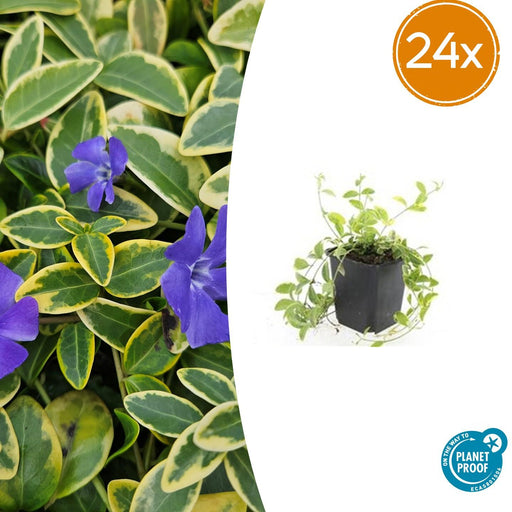
**Vinca minor 'Aureovariegata'** – An elegant ground cover with green foliage, beautifully variegated with golden edges. This evergreen plant produ...
View full details**Vinca minor 'Aureovariegata'** – An elegant ground cover with green foliage, beautifully variegated with golden edges. This evergreen plant produ...
View full details**Vinca minor 'Argenteovariegata'** – An elegant ground cover with green leaves, beautifully variegated with silvery white edges. This evergreen pl...
View full details**Vinca minor 'Argenteovariegata'** – An elegant ground cover with green leaves, beautifully variegated with silvery white edges. This evergreen pl...
View full details**Vinca minor 'Aureovariegata'** – An elegant ground cover with green foliage, beautifully variegated with golden edges. This evergreen plant produ...
View full details**Vinca minor 'Argenteovariegata'** – An elegant ground cover with green leaves, beautifully variegated with silvery white edges. This evergreen pl...
View full details**Vinca minor 'Aureovariegata'** – An elegant ground cover with green foliage, beautifully variegated with golden edges. This evergreen plant produ...
View full details**Vinca minor 'Argenteovariegata'** – An elegant ground cover with green leaves, beautifully variegated with silvery white edges. This evergreen pl...
View full details**Vinca minor 'Aureovariegata'** – An elegant ground cover with green foliage, beautifully variegated with golden edges. This evergreen plant produ...
View full details**Vinca minor 'Argenteovariegata'** – An elegant ground cover with green leaves, beautifully variegated with silvery white edges. This evergreen pl...
View full detailsThe Asarum europaeum, also known as European wild ginger, is an elegant, low-growing shade plant with glossy dark green, heart-shaped leaves. This ...
View full detailsThe Asarum europaeum, also known as European wild ginger, is an elegant, low-growing shade plant with glossy dark green, heart-shaped leaves. This ...
View full detailsThe Asarum europaeum, also known as European wild ginger, is an elegant, low-growing shade plant with glossy dark green, heart-shaped leaves. This ...
View full detailsThe Asarum europaeum, also known as European wild ginger, is an elegant, low-growing shade plant with glossy dark green, heart-shaped leaves. This ...
View full detailsThe Asarum europaeum, also known as European wild ginger, is an elegant, low-growing shade plant with glossy dark green, heart-shaped leaves. This ...
View full detailsHelleborus orientalis, also known as Lenten Rose, is an evergreen perennial with glossy dark green foliage and large, often strikingly colored flow...
View full detailsConvallaria majalis, better known as Lily of the Valley, is an elegant and delightfully fragrant perennial that shines in spring with graceful whit...
View full detailsConvallaria majalis, better known as Lily of the Valley, is an elegant and delightfully fragrant perennial that shines in spring with graceful whit...
View full detailsConvallaria majalis, better known as Lily of the Valley, is an elegant and delightfully fragrant perennial that shines in spring with graceful whit...
View full detailsConvallaria majalis, better known as Lily of the Valley, is an elegant and delightfully fragrant perennial that shines in spring with graceful whit...
View full detailsConvallaria majalis, better known as Lily of the Valley, is an elegant and delightfully fragrant perennial that shines in spring with graceful whit...
View full detailsHelleborus orientalis, also known as Lenten Rose, is an evergreen perennial with glossy dark green foliage and large, often strikingly colored flow...
View full detailsHelleborus orientalis, also known as Lenten Rose, is an evergreen perennial with glossy dark green foliage and large, often strikingly colored flow...
View full detailsHelleborus orientalis, also known as Lenten Rose, is an evergreen perennial with glossy dark green foliage and large, often strikingly colored flow...
View full detailsHelleborus orientalis, also known as Lenten Rose, is an evergreen perennial with glossy dark green foliage and large, often strikingly colored flow...
View full details Garden plants
Outdoor plants
Patio plants
Large Garden Plants
Garden plants
Outdoor plants
Patio plants
Large Garden Plants
 Garden plants Shade
 Shrubs
 Bougainvillea
 Camelia
 Campanula
 Citrus Australasica
 Citrus Calamodin
 Citrus trees
 Erysimum
 Fargesia Rufa (Bamboo)
 Fruit Trees & Fruit Plants
 Evergreen Shrubs
 Hanging geranium (Pelargonium peltatum)
 Japanese Maple
 Christmas Rose (Helleborus Niger)
 Laurus Nobulis (Laurel)
 Lavender Plants
 Espalier trees
Vegetable Garden Plants
Espalier trees
Vegetable Garden Plants
 Nerium Oleander
 Olive trees
 Olive bush
Yucca Rostrata
Olive bush
Yucca Rostrata
 Butterfly bush (Buddleja davidii)
 Spanish Daisy
 Hydrangea
 Eucalyptus Tree
 Coreopsis (Girl's Eyes)
 Hibiscus
 Conifers
 Forest plants
 Tissue plants
 Rock plants
 Wall plants
 Bankside plants
 Underplanting
The term stinzen plants refers to a special group of ornamental plants that were planted at country estates, castles, and manor farms (stinzen) starting in the 16th century. The most famous and beloved stinzen plant is undoubtedly the Snowdrop, followed by the Crocus and the Wood Anemone. The Lenten Rose (Helleborus) and the Lily-of-the-Valley are also iconic species within this group. These plants are popular because they are often the first to add color to the garden after winter. Because a stinzen plant often propagates itself via bulbs or runners, a beautiful, wild carpet of flowers develops over time that becomes more impressive every year.
The greatest benefit of stinzen plants is their ability to naturalize. Once planted, they require hardly any attention; they return faithfully every year and spread steadily. In addition, stinzen plants are essential for early biodiversity in the garden. Because they bloom at a time when there are few other flowers, they provide vital food for early bees and bumblebees. Another advantage is that a stinzen plant thrives excellently in shady spots under deciduous trees and shrubs, where many other garden plants struggle to survive. They transform 'difficult' corners into a living historical spectacle.
When choosing the right stinzen plant for your garden, there are a few important factors:
Several types of stinzen plants can be distinguished. We know the early bulbous plants such as the Winter Aconite and the Grape Hyacinths, which often pop their heads as early as February. In addition, there are the perennials belonging to the stinzen flora, such as Sweet Woodruff (Galium odoratum), Wild Wild Parsley (Asarum), and Caucasian Forget-me-nots (Brunnera). Wood ferns are also often mentioned in the same breath as this group. A suitable stinzen plant can be found for every garden; from subtle white woodland flowers to exuberant purple carpets marking the transition from winter to spring.
The ideal spot for a stinzen plant is under deciduous trees or shrubs. In early spring, they catch enough light there to bloom, while in summer they are protected from the bright sun by the canopy. When planting a stinzen plant, mimicking the natural forest floor is crucial. Mix plenty of leaf compost or humus into the soil. Preferably plant them in groups for an immediate effect. Because these plants love peace and quiet, it is important to place them in a spot where the soil is not regularly tilled, so that the roots and bulbs can thrive undisturbed.
Caring for stinzen plants is very simple and revolves mainly around patience. The most important thing is to let the foliage die back completely after flowering and not cut it off; the plant draws energy from this for next year's bloom. An annual application of lime (for lime-loving species) and a layer of compost in the autumn mimic the natural leaf fall of the forest and keep the stinzen plant vital. Avoid the use of heavy fertilizers; a stinzen plant prefers natural, slow-release nutrition. Furthermore, it is mainly a matter of letting nature take its course and enjoying the annual expansion.
Do you want to bring that unique, historical atmosphere to your own garden? Buying stinzen plants at Planten247 is an investment in years of natural enjoyment. We offer a selection of the hardiest species known for their excellent naturalizing properties. Whether you have a small shady corner or want to transform a large lawn into a sea of flowers, the right stinzen plant makes all the difference. Our plants are carefully selected and delivered fresh, ensuring they get an optimal start in your garden. Order today and bring a piece of living heritage into your outdoor space with the beautiful stinzen flora from Planten247!
The flowering time of a stinzen plant varies by species, but the peak is between February and May. The Winter Aconite and the Snowdrop often kick things off, followed by the Wood Anemone and the Hollowroot in March and April. In May, species such as the Lily-of-the-Valley conclude the stinzen season.
Absolutely! That is precisely the strength of a good stinzen plant. They are perennial and often even 'indestructible' if planted in the right spot. Instead of diminishing, most species will actually spread further throughout your garden via seeds or bulbs.
If you have planted a stinzen plant in the lawn (such as crocuses), you may only mow once the plant's foliage is completely yellow and withered. This is usually around the end of May. If you mow too early, the plant will not receive enough energy for the next flowering period.
Absolutely. Although a stinzen plant has a historical origin, they fit perfectly into a modern, low-maintenance garden. They fill in the bare soil under shrubs, giving weeds less of a chance and ensuring your garden looks well-cared for and lively even in early spring.