
5% off with code HELLO5
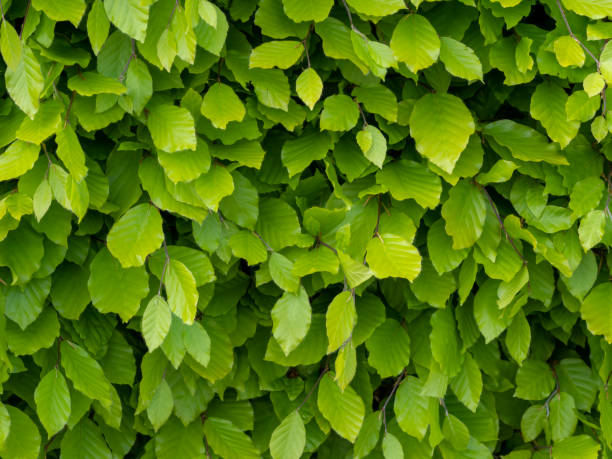

Pruning a beech hedge is best done twice a year.
First pruning – In June, after the first growth period. This stimulates dense branching and keeps the hedge in shape. This is especially important to maintain a compact and full hedge, as a beech hedge tends to shoot up quickly in the spring.
Second pruning – In September, before autumn. This ensures the hedge goes into winter looking neat and retains its shape. A well-maintained hedge pruned in September remains beautiful for longer and offers protection against winter conditions.
Do you only want to prune once a year? Then late June or early July is a good time. The hedge then has sufficient time to recover and sprout again before winter begins. When you perform only one pruning session, the hedge may look a bit rougher in autumn and winter, but it remains functional and healthy.

For a neat and healthy hedge, it is important to apply the correct pruning technique.
Preparation – Ensure you have sharp hedge trimmers or an electric hedge trimmer. Blunt blades can damage the leaves and branches, which can lead to brown edges and a less well-groomed appearance.
Start at the top – Work from top to bottom and keep the top slightly narrower than the bottom. This prevents bare spots due to a lack of light and ensures that the lower branches continue to grow well.
Check regularly – Step back occasionally to check that the hedge is being pruned evenly. This prevents crooked lines and uneven growth.
Clean up – Remove the pruning waste immediately to prevent suffocation of the grass or other plants. This also helps to avoid fungi and diseases that can arise from rotting pruning waste. Feeding – After pruning, it is good to fertilize the hedge with organic fertilizers. This stimulates new growth and keeps the leaves healthy and green.
A chainsaw can be used to prune a beech hedge, but this is only recommended for extremely thick branches or a neglected hedge. With younger or well-maintained hedges, a chainsaw can cause damage and result in uneven pruning. Use the chainsaw with care and ensure you work in small steps to avoid cutting the hedge back too rigorously. Always wear the proper protective equipment when working with a chainsaw, such as gloves and safety glasses.
A beech hedge can be pruned back quite deeply, but keep in mind that drastic pruning takes time to recover. Cutting back to the old wood is possible, but this must be done gradually. Step-by-step approach: Prune a maximum of one third of the hedge per year to increase the chance of recovery. Ensure proper fertilization and watering after pruning to promote recovery. This helps the hedge develop new shoots faster. Wait patiently for new shoots and prune them gradually to get the hedge back into shape. If necessary, prune extra in the spring to promote even growth and reduce bare spots. An old or neglected beech hedge can be drastically pruned back to rejuvenate it. It is best to do this in the winter or early spring, before the sap flow starts. Do not prune more than a third of the hedge per year to prevent the plant from experiencing too much stress. By taking a phased approach, the hedge remains healthy and gets the chance to sprout again.
If the hedge has been severely thinned, it may take several seasons for it to fully recover. In this case, it can help to provide the hedge with extra nutrients and keep the soil well-moistened so that the new shoots grow faster.
Cutting and pruning are often used interchangeably, but cutting usually means light shaping. This can be done throughout the entire growing season, as long as you do not prune during periods of extreme heat or frost. For a neat hedge, it is ideal to keep up with light pruning work regularly.
With frequent trimming, the leaves remain more compact and the hedge takes on a neater appearance. This can be particularly useful for hedges that serve as decorative garden boundaries. Pruning a beech hedge in wet weather is not ideal, but it is possible. The biggest risk is that wet leaves and branches are damaged more quickly and are more susceptible to fungi. Use sharp and clean pruning shears to prevent infections, and preferably prune on a dry, cloudy day so that the hedge does not burn from direct sunlight on the freshly pruned branches.
If you do prune in wet weather, it is advisable to let the hedge dry thoroughly and possibly use an antifungal agent to prevent problems.
By pruning your beech hedge at the right times and in the right way, it will remain healthy and beautiful for years. Follow the tips above and enjoy a neat, full hedge that adorns your garden all year round!
How far can you prune back a hornbeam?
Drastic Pruning of an Old Beech Hedge
When to trim a beech hedge?

Pruning a Beech Hedge in Wet Weather


