
5% off with code HELLO5
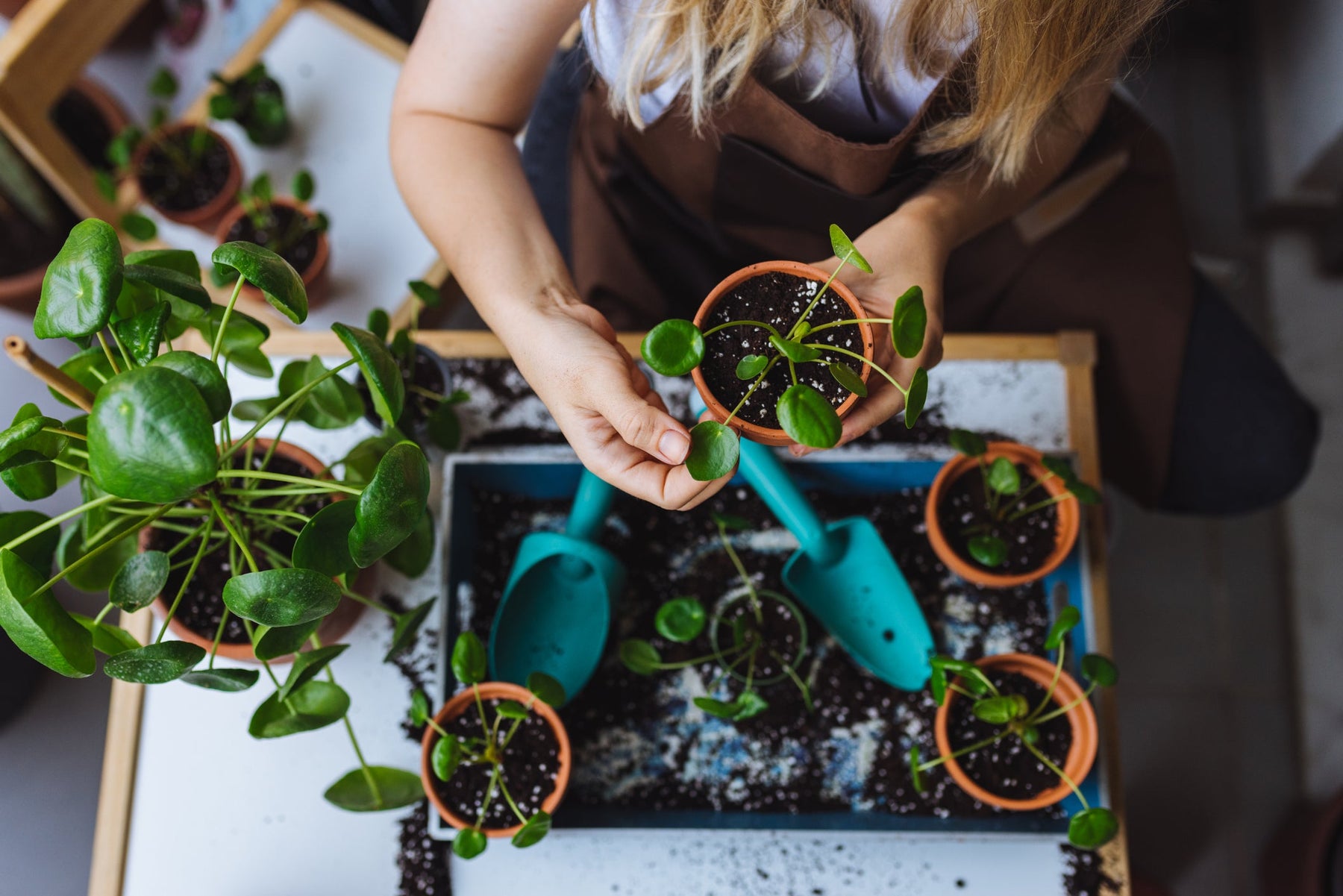

There are numerous ways to propagate plants, depending on the type of plant and the available resources. Below is an overview of commonly used propagation methods:
Stem cutting
Cut a stem into pieces of 5 to 10 cm. You can root each piece in water or soil so that it grows into new plants.
Top cutting
Cut off the top of a plant or stem just above a leaf node of the mother plant. Let the cutting root to create a new plant.
Baby or Pup
Some plants produce small 'babies' or 'pups' next to the mother plant. These cuttings already have roots and can be repotted immediately.
Leaf cutting
With leaf cuttings, you use a single leaf to grow a new plant. The leaf takes root and develops into an independent plant.
Layering
Bend a branch or stem toward the ground so that the end lies in the soil. This part begins to form roots, after which it can be cut off from the mother plant.
Dividing
Carefully divide a healthy plant into several parts and repot them as separate plants in potting soil.
Root cutting
Cut a root from the plant into pieces. You can place these pieces in soil to grow new plants.
Wood cutting
Cut off a sturdy branch of at least 10 cm and place it in the soil. With some patience, the branch will form roots.
Air layering
Strip a section of the stem bare and wrap it in moist moss or soil. This stimulates the formation of roots halfway up the plant.
Grafting
Place a piece of stem into an incision of another stem. The two parts grow together and form a new plant.
Budding
Attach an eye (a bud) from one plant to the stem or stalk of another plant. These continue to grow together as one plant.
Seeds or Spores
Seeds or spores are a natural way to propagate plants. Some species must flower first before they produce seeds or spores.

The best time to take cuttings from plants depends on the type of plant and the specific cutting method, but generally speaking:
Tip: Choose a cloudy day for taking cuttings from outdoor plants to prevent the cuttings from drying out due to direct sunlight.

Do you want to start propagating plants, but don't know which plants are suitable? No worries! Some plants are particularly easy to propagate and require little experience or special supplies. Here are 6 plants that are perfect for both beginners and advanced gardeners:
Epipremnum aureum, also known as Pothos, is a popular houseplant that is particularly easy to propagate. This plant roots quickly and reliably. All you have to do is cut off a piece of stem with a leaf node. You can let the stem cutting root in water or place it directly in moist soil.
Succulents, such as Echeveria and Crassula, are particularly easy to propagate. These plants grow quickly from individual leaves or small offshoots and require little care during rooting. Let a loose leaf dry for a few days and then place it on dry soil.
The Monstera, also known as Swiss Cheese Plant, is a beloved houseplant that is easy to propagate. This plant roots quickly from a node on the stem, making it ideal for sharing with friends. When Monstera cuttings, you can take a stem cutting and place it in water or soil with a node below the surface.
The Grasslily, also known as Chlorophytum, is one of the easiest plants to take from cuttings. This so-called spider plant produces small 'baby plants' on long stems, which you can easily use for Grass Lily Cuttings. Cut a baby plant and place it in water or directly in soil to grow new roots.
The Tradescantia, also known as Father Plant, is a fast grower that is effortless to propagate. Tradescantia cuttings is simple: cut off a piece of stem and place it in water or directly in moist soil. New roots will develop within a short time, making this plant easy to propagate.
The Sansevieria, better known as Snake Plant, is a strong and low-maintenance plant that you can easily propagate via leaves. To Sansevieria cuttings, you cut a leaf into pieces and place them upright in moist soil. Within a short time, the pieces develop new roots, allowing you to easily grow multiple new plants.
With these easy-to-propagate plants, you can easily expand your green collection and enjoy the process!

Have you taken a cutting from your houseplant? Great! Now it is time to let the cutting root so that it grows into a beautiful, strong plant. But where is actually the best place to grow that cutting? There are various options, which we would like to share with you below!
Water is one of the easiest ways to root your cutting. Place the cutting in a glass or small vase with clean water, ensuring that the leaf nodes are submerged but that no leaves are hanging in it. Place the glass in a bright spot, but not in direct sunlight. Within a few weeks, you will see roots forming, after which you can plant the cutting in soil.

Cutting soil is specially developed to give cuttings a good start. It is light, airy, and retains just enough moisture. Place your cutting in a small pot with cutting soil and keep the soil slightly moist, but not soaking wet. A clear plastic bag over the pot can help create a humid climate, which accelerates rooting.
Sphagnum moss is ideal for cuttings that need a bit more moisture. This moss retains water well and ensures a constantly moist, yet airy environment. Wrap the moss around the bottom of your cutting, or place the cutting in a container with moist sphagnum. The moss stimulates root growth and prevents drying out.
Perlite is an airy and sterile material that gives roots plenty of breathing room. It retains a little moisture and prevents your cutting from drowning. Mix perlite with cutting soil or use it pure. It is perfect for cuttings prone to rot, as excess water drains away easily. Place your cutting in a container with perlite and keep it slightly moist for optimal root growth.
You can also place plant cuttings directly in the soil or a flowerpot. The advantage of this is that the plant can adapt immediately to its growing location, but you cannot see the root growth, which makes it slightly more challenging. Ensure that the soil remains slightly moist so that the cutting receives sufficient water without the roots rotting. This is especially important if your cutting has just come out of the water and needs to get used to the new environment. Use soil that suits the plant species: airy potting soil for tropical plants, cactus soil for succulents, or a mix with perlite for extra aeration. Give your cutting the perfect start this way!

There can be several reasons why your cuttings are not rooting. It may be due to too much or too little water, an unsuitable temperature, or insufficient light. Ensure that your cuttings are in a warm place, out of direct sunlight, and that the soil or water they are in is not too wet or too dry. It is also possible that your cuttings were not cut correctly, or that you chose the wrong propagation method for the plant species. Also check that your cuttings are clean and healthy when taking them, as damaged or diseased cuttings may not root as well.

Propagating plants can sometimes present a bit of a challenge, but with the right approach and care, you can achieve great success. Here are some handy tips that can improve your propagation process:
With these tips, you increase the chance of successful cuttings! Have fun!


