
Lepismium Care
, 22 min reading time
, 22 min reading time
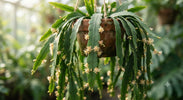
Lepismium is a fascinating and easy hanging plant / houseplant from the cactus family (Cactaceae) that is often referred to as a coral cactus due to its striking, coral-like branches. This epiphytic cactus stands out with its elegant, hanging segments and adds an exotic touch to any interior. With its unique appearance and specific care needs, Lepismium is an interesting choice for plant lovers. In this blog, we discuss everything you need to know to keep your Lepismium healthy and happy.
There are various species of Lepismium, but two of the best known are:
Lepismium bolivianum: Known for its long, slender segments and dense growth. This species has a graceful appearance with branches that hang downwards.
Lepismium houlletianum: Characterized by its broader segments and more robust structure. It offers a sturdier appearance compared to other Lepismium species.
Watering is a crucial aspect of caring for your Lepismium. This houseplant, also known as the coral cactus, has specific moisture needs that differ from those of other cacti. Although Lepismium is a cactus, it is epiphytic, which means that in nature it grows on trees and therefore does not tolerate the same extreme drought as other cacti.
Lepismium needs moderately moist soil. It is important to let the soil dry out between waterings. During the growing season, which is usually from spring to autumn, you can water the plant about once a week. In winter, when the plant is in a dormant period, the frequency of watering can be reduced to every two weeks or even less, depending on the humidity and temperature in your home.
Too much water can lead to root rot and other problems such as fungal infections. It is important to use well-draining potting soil and to regularly check for signs of rot, such as brown or soft spots on the branches.
Signs that your Lepismium needs water include a dry top layer of soil and wilting of the branches. If the branches look limp or dried out, this may be a sign that the plant needs more moisture.
By watering your Lepismium correctly, you ensure that the plant remains healthy and can grow well. Always pay attention to the specific needs of your plant and adjust your watering based on the seasons and the conditions in your home.
The location of your Lepismium is of crucial importance for its health and well-being. This houseplant has specific requirements regarding light, temperature, and hardiness to thrive optimally. By choosing the right location, you ensure that your Lepismium can properly develop its beautiful, hanging branches and stay healthy.
Lepismium does best in bright, indirect light. Direct sunlight can burn the branches, while too little light can hinder growth. Place your Lepismium in a spot where it receives sufficient but filtered light, such as near a window with filtered sunlight or on a bright windowsill. It can also thrive under artificial light if natural light is limited.
Lepismium likes warm temperatures. The ideal temperature is between 18°C and 24°C. This plant is not suitable for cold conditions and must be protected against temperatures below 10°C. During the winter, the plant can be sensitive to cold, so ensure that the temperature in the room is not too low and avoid cold drafts.
If you live in a warm climate, you can place your Lepismium outdoors in the summer, but only in a shady spot. Direct sunlight can damage the plant, so choose a place with filtered light or partial shade. Make sure to bring the plant indoors as soon as temperatures start to drop.
It is better to avoid direct sunlight, as this can damage the branches. Choose bright, indirect light to allow your Lepismium to grow optimally.
Cold temperatures can damage the plant, which can lead to wilting or discoloration of the branches. Ensure that you keep your Lepismium in a warm, draft-free environment, especially in winter.
By choosing the right location for your Lepismium, you ensure that this plant retains its beautiful appearance and remains healthy. Pay attention to the specific light and temperature requirements to ensure your coral cactus can grow and bloom optimally.
Repotting your Lepismium is an important step in the care of this beautiful houseplant. Lepismium, known for its elegant, drooping branches and exotic appearance, sometimes grows quickly and may need more space over time. By repotting regularly, you ensure that the plant has sufficient space for healthy root growth and prevent the roots from becoming suffocated.
It is time to repot your Lepismium when the plant seems to be outgrowing its current pot. This often happens if you notice the roots coming out of the drainage holes or if the plant is growing more slowly than normal. In general, it is recommended to repot your Lepismium every 2-3 years, or sooner if you notice signs of root overcrowding.
1. Choose a suitable pot:
2. Preparation:
3. New potting soil:
4. Planting:
5. After repotting:
Lepismium usually needs to be repotted every 2-3 years, or sooner if the plant seems too large for its pot or starts growing more slowly.
Signs are roots coming out of the drainage holes, a plant that is growing slowly, or a root ball growing out of the pot.
Yes, you can carefully prune dead or damaged roots during repotting. This helps the plant grow healthier in the new pot.
By repotting your Lepismium correctly, you ensure that the plant has enough room to grow and remains healthy. Pay attention to the size of the pot and the condition of the roots to guarantee a smooth transition to the new pot.
Fertilization is essential for the healthy growth of your Lepismium. By feeding your plant regularly, you ensure that it receives all the necessary nutrients to grow well and maintain its unique appearance. The right fertilization regime helps your Lepismium stay lush and healthy, especially during active growth periods.
Lepismium needs nutrients during the growing season, which runs from spring to early autumn. During this period, you can fertilize the plant every 4-6 weeks. In winter, when the plant is in a dormant period, fertilization is usually not necessary and can even be harmful because the plant grows less actively.
Types of fertilizers:
Liquid fertilizers: These are easy to apply and can be added to the water you use to water your plant. Choose a balanced liquid fertilizer with equal parts nitrogen (N), phosphorus (P), and potassium (K), such as 10-10-10 or 20-20-20. These fertilizers provide a constant supply of nutrients and are convenient for regular application.
Granule fertilizers: These are sprinkled on top of the potting soil and release nutrients slowly. They can be applied less frequently, usually every 6-8 weeks during the growing season. Granular fertilizers are convenient for long-lasting nutrition and have a slower release.
1. Follow the instructions:
2. Application:
3. After fertilization:
Over-fertilization can lead to root burn, leaf drop, or unhealthy growth. It is important to follow the recommended amount and not to over-fertilize the plant.
It is usually not necessary to fertilize in the winter, because the plant grows less actively and requires fewer nutrients. Fertilization during this period can even lead to nutrient accumulation and damage to the plant.
Signs of a deficiency can include yellowing of the leaves, slow growth, or falling leaves. If you notice these symptoms, it may be helpful to review your fertilization regime.
By fertilizing your Lepismium regularly and correctly, you ensure a healthy and vital plant that maintains its lush growth and beautiful appearance. Follow the fertilization guidelines and adjust your approach based on your plant's needs and growth phase.
The potting soil for your Lepismium plays a crucial role in the health and growth of this unique houseplant. Lepismium, known for its graceful, coral-like branches, has specific potting soil needs that ensure the plant receives the right balance of moisture and aeration. A well-chosen potting soil ensures optimal root development and prevents problems such as root rot.
Lepismium is an epiphytic cactus, which means that it naturally grows on other plants in the wild and not in traditional soil. Therefore, this plant needs a potting soil that is well-draining and provides sufficient air circulation to the roots.
Cactus mix: A ready-made cactus or succulent mix is ideal for Lepismium. These mixtures have been specially developed to provide good drainage, which is essential to prevent root rot.
Homemade mix: If you want to make your own potting soil mixture, you can use a combination of potting soil, perlite, and grit or sand. A ratio of 2 parts potting soil, 1 part perlite, and 1 part grit or sand ensures a well-draining mix that gives the roots enough oxygen and prevents water from accumulating.
1. Choose a well-draining mix:
2. Preparing the pot:
3. Replace old potting soil:
Permeability is crucial because Lepismium, as an epiphytic cactus, is susceptible to root rot if the soil remains too moist. Well-draining potting soil ensures that water drains away quickly and prevents clumping that can be harmful to the roots.
Regular potting soil can be too compact and provide insufficient drainage. It is better to use a cactus mix or a homemade mix with perlite and sand to ensure good drainage.
It is a good idea to replace or renew the potting soil with every repotting, usually every 2-3 years, or when you notice that the soil is saturated or depleted.
By choosing the right potting soil for your Lepismium, you ensure that your plant has the optimal conditions for healthy growth and development. A well-draining mix helps prevent common problems and ensures that your Lepismium continues to develop its beautiful, coral-like branches.
Taking cuttings is a popular and effective way to propagate new Lepismium plants. Lepismium, with its decorative hanging branches, can easily be propagated by taking cuttings. This offers not only a chance to obtain more plants, but also to keep your current plant healthy by promoting growth.
Best time to take Lepismium cuttings:
The best time to take cuttings from your Lepismium is during the spring or early summer season, when the plant is actively growing. This increases the chance of successful root formation and ensures faster growth of the new plants.
How to take Lepismium cuttings:
1. Choose healthy branches:
2. Cut the cuttings:
3. Let the cuttings dry: 4. Pot the cuttings: 5. Watering: Care of the cuttings: 1. Humidity: 2. Check regularly:
Roots can be checked by gently pulling on the cuttings or by looking into the bottom of the pot. If there is resistance, roots are likely present.
Remove the affected cuttings immediately and check the potting soil and pot for excess moisture. Ensure that the cuttings can dry thoroughly before placing them back in the soil.
Although it is possible to root cuttings in water, it is usually recommended to plant them directly in potting soil for better control over humidity and root growth.
By following the correct steps when taking and caring for cuttings, you can successfully propagate new Lepismium plants. This technique offers a great way to expand your collection or to give healthy plants to friends and family.
The Lepismium is generally not known to be particularly toxic to humans or pets. Although it does not exhibit severe toxicity, some animals, such as cats, may experience mild stomach upset or slight irritation if they eat parts of the plant. It is always a good idea to ensure that pets do not get near your houseplants. In case of doubt or symptoms of ingestion, it is advisable to contact a veterinarian.
Pruning is an important part of caring for your Lepismium. This plant, known for its elegant, drooping branches, benefits from periodic pruning to maintain its shape, promote health, and encourage lush growth. Although pruning is not always strictly necessary, it helps to maintain a healthy and attractive plant.
Best time:
The best time to prune your Lepismium is during the spring or early summer season, when the plant is actively growing. This ensures that the plant recovers quickly and can develop new growth.
How to prune Lepismium:
1. Inspect the plant:
2. Use clean tools:
3. Prune selectively:
4. Remove excess growth: After pruning: 1. Care for the plant: 2. Watch for new growth:
Snoeien is meestal nodig eens per jaar, maar kan vaker worden gedaan als de plant snel groeit of als je merkt dat de plant zijn vorm verliest.
Ja, te veel snoeien kan stress veroorzaken en de plant verzwakken. Het is belangrijk om slechts 20-30% van de plant te snoeien om een gezonde groei te behouden.
Als je plant niet goed herstelt, controleer dan de verzorgingsomstandigheden zoals watergift, licht en voeding. Zorg ervoor dat de plant niet te veel wordt blootgesteld aan stress en geef hem de tijd om te herstellen.
Door je Lepismium regelmatig en zorgvuldig te snoeien, zorg je voor een gezonde, aantrekkelijke plant die zijn kenmerkende uitstraling behoudt en optimaal kan groeien.
Door je Lepismium regelmatig de juiste zorg te geven, zoals het onderhouden van de juiste potgrond, watergift en af en toe snoeien, houd je je plant gezond en mooi. Goede verzorging zorgt ervoor dat je plant optimaal groeit en zijn unieke uitstraling behoudt. Met aandacht en geduld kun je genieten van een prachtige Lepismium die een levendig en exotisch accent aan je ruimte toevoegt.


