
Controlling Ground Elder
, 8 min reading time
, 8 min reading time
In many gardens, it is a recurring problem: a plant that starts out as an innocent garden plant but soon develops a tendency to overgrow other plants. A well-known example of this is Ground Elder. This perennial spreads rapidly via underground rhizomes and mercilessly conquers borders, lawns, and even paving.
Yet Ground Elder is not exclusively a culprit. In fact, Ground Elder is an excellent ground cover, and that is good for the life in your garden. Ground covers help keep the soil moist, protect against weeds, and provide shelter for animals such as frogs, toads, and newts. Leaving ground elder standing can therefore certainly be a conscious choice. Unless it doesn't bother you. Would you rather not have this invasive plant in your garden? Fortunately, there are several ways to recognize and combat ground elder. In this blog, you can read how.

Ground Elder (Aegopodium podagraria) is a fast-growing, perennial plant native to Europe and West Asia. It belongs to the Apiaceae family, just like cow parsley, parsnip, and carrot. Centuries ago, the plant was cultivated in herb gardens by monks and cloister residents for its medicinal properties and edible leaves. Nowadays, we mainly view it as an unwanted garden visitor.
What makes ground elder so difficult to control is its underground network of rhizomes. These roots can spread for meters, deep underground, causing the plant to return time and again – even after you have completely removed it from above ground.
Ground elder grows mainly in partial shade and on moist, nutritious soil. It is primarily found along forest edges, under hedges, in shady borders, and even between paving or sidewalk tiles.
Ground elder is often considered a weed, mainly because it grows so fast and spreads easily via underground rhizomes. As a result, it can crowd out other plants and take over entire borders. However, it is actually a native plant with useful properties: it is edible, attracts insects, and provides shelter for small animals. Whether you consider it a weed therefore depends mainly on where it grows and whether you can keep it under control in your garden.
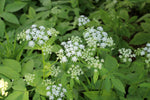
Ground Elder is easy to recognize by a number of clear characteristics. As soon as you know what to look for, you will soon see this plant pop up among your other garden plants.

No, Ground Elder is not poisonous. In fact, the leaves are edible and were formerly used as a vegetable and herb. In some cultures, ground elder is still harvested and used in salads, soup, or pesto.
Pay close attention: From a distance, ground elder sometimes looks like other plants that are toxic, such as spotted hemlock. Not sure if it really is ground elder? Then do not pick it. Only do so if you are absolutely certain that it is the right plant. Better safe than sorry!
Do you want to effectively control ground elder? Then persistence is the keyword. The plant is notorious for its tough rhizomes, so weeding once is rarely enough. Below you will find a number of tips that you can apply:
The most direct, but labor-intensive way to control ground elder is by manually removing the roots. It is important not to just start digging haphazardly, but to proceed with real care.
Use a digging fork (not a shovel) to avoid tearing the roots apart – any remaining piece can sprout again.
Remove as much of the root system as possible in one go.
Check the area regularly for new shoots and pull them out immediately.
This method requires time and discipline, but is effective in the long term – especially if you combine it with other control techniques.
A natural and sustainable approach is to compete ground elder with other plants. Especially strong and dense ground cover plants are effective in this regard. They ensure that the ground elder no longer receives light and space to grow.
Good examples of suitable plants are:
Geranium nodosum – Geraniums grow well in shade and quickly form a dense ground cover.
Geranium macrorrhizum (Crane's-bill) – fragrant leaves, keeps weeds at bay, ideal as a ground cover.
Knotweed (Persicaria) – Knotweed is robust and vigorous, and quickly forms a dense carpet.
These plants are not only useful, but also add color and structure to your garden. By strategically planting them in places where ground elder is common, you can naturally suppress the invasive weed.

Ground elder prefers to grow on acidic, nitrogen-rich soil. By increasing the acidity of the soil with lime, you make the conditions less attractive for this plant.
Scatter garden or lime granules in early spring or autumn.
Optionally, first test the pH value of your soil with a simple test kit.
Repeat the liming annually for a lasting effect.
Note: not all plants like lime-rich soil. Therefore, always check whether the other plants in your garden can tolerate this well.
A popular home method to temporarily suppress ground elder is the use of vinegar. The acidic liquid burns away the plant's leaves, causing photosynthesis to stop.
Mix natural vinegar with a small amount of dish soap (for better adhesion) and spray this on the leaf.
Do this on a dry, sunny day for maximum effect.
Repeat the treatment if necessary.
Important: this method kills only the above-ground part of the plant – the roots remain alive. Therefore, use this as a supporting measure in combination with root removal.
A surprising but effective tip is the use of potatoes as a natural weapon against ground elder. How does that work?
Plant potatoes in the area where ground elder grows.
During growth, potatoes develop a lot of foliage, which takes sunlight away from the underlying plants.
When harvesting, the soil is dug over, automatically removing rhizomes of removes ground elder.
This method works well as a temporary strategy to reset a problem area, after which you can replant the spot with desired species.

Controlling ground elder requires patience, but with the right approach, it is certainly possible. Whether you choose weeding, natural competition with ground covers, or experiment with home remedies: consistency is the key. Perhaps after reading this article, you will decide to simply leave ground elder where it is. As a natural ground cover and a refuge for life in your garden.


